Opening Keynote: Wednesday, July 22nd
From Awakening to Building: Liberal Arts “Next Moves” for Teaching and Learning in the Age of AI
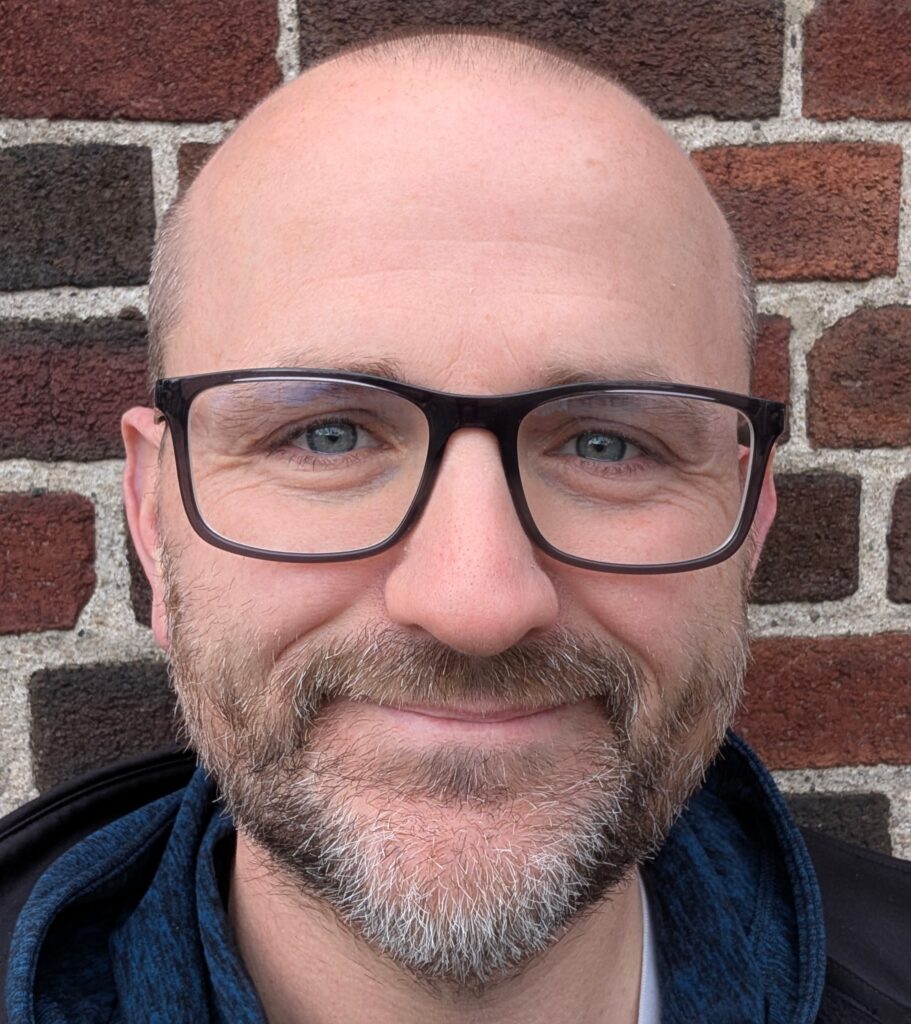
Lance Eaton
AI is less the cause of our disruption in liberal arts education than the mirror that makes long-standing tensions newly visible. Paths forward are still readily available to us to reinforce and build upon the importance of liberal arts that offer better pathways than rejecting AI. What happens if take this moment to meet students where they are, reduce meaningless friction, and treat AI as an object of inquiry rather than a shortcut to be policed? This keynote explores this question, in part, by considering the concrete “next moves” liberal-arts educators can make: moves that are inclusive, mission-aligned, and realistically sustainable. The talk maps a small set of design shifts that reliably increase learning value even in an AI-saturated environment. Through a pragmatic and humanistic approach, this talk shares insights on how liberal-arts education remains indispensable, but only if we translate our values into learning designs that hold up under new conditions.
Dr. Lance Eaton is the Senior Associate Director of AI in Teaching and Learning at Northeastern University. He has earned a Master’s in American Studies (UMASS Boston), Public Administration (Suffolk University), and Instructional Design (UMASS Boston). He completed his Ph.D. in Higher Education (UMASS Boston) with a focus on academic piracy and how scholars navigate the privatization of research literature in the 21st century.
His work engages with the possibility of digital tools for expanding teaching and learning communities while considering the profound issues and questions that educational technologies open up for students, faculty, and higher ed as a whole. He has engaged with scores of higher education institutions about navigating the complexities and possibilities that generative AI represents for us at this moment. His musings, reflections, and ramblings on AI and Education can be found on his blog, AI + Education = Simplified.
Lunch Keynote: Wednesday, July 22nd
Mend: A Story
Living with Tensions Between the Authentic and Artificial
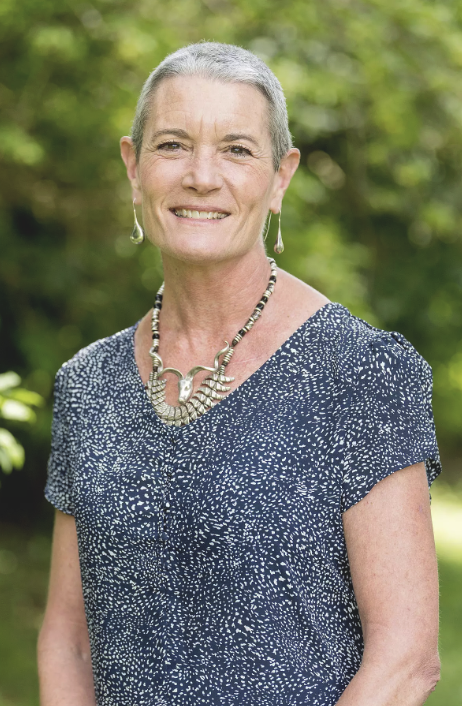
Theresa L. Burriss
Existentialists, as diverse as Soren Kierkegaard and Friedrich Nietzsche, have debated and written about the meaning of authenticity and what’s entailed to live an authentic life, especially amidst various social challenges across time. Such struggles existed long before artificial intelligence yet have intensified with its permeation across multiple sectors. Every day, emails and news headlines about AI fill our in-boxes. As with most technological advancements, AI tools can be used for either good or evil, for either inspired or vapid rhetoric, for either the genuine or the fraudulent. Thus, we are prompted to inquire, “How do the liberal arts inspire authenticity in the 21st century, particularly as humans navigate the deluge of artificial intelligence in almost every facet of life? How do we as liberal arts students and educators navigate the tensions inherent in our current social and political environments that are enhanced and/or compounded by AI? Who determines whose voices qualify as authentic? How does AI serve to democratize lived experiences? In what ways do the natural environment and the other-than-human invite us to discover and dive deeper into understandings of our authentic selves?” We will explore these and other questions as we attempt to mend the fraught stress between the authentic and the artificial.
Born and raised in Northeast Tennessee/Southwest Virginia, Theresa L. Burriss is a multidisciplinary Appalachian Studies scholar and educator, who has devoted her life’s work to serving the region. As a Fulbright Scholar to Romania, she introduced the region to American Studies students at Transilvania University in Brasov through Appalachian literature and conducted cross-cultural ethnographic research in the Jiu Valley, Romania’s coal mining region, to compare with Central Appalachian coal communities.
Breakfast Keynote: Thursday, July 23rd
The Opposite of Cheating: Teaching for Integrity in the Age of AI
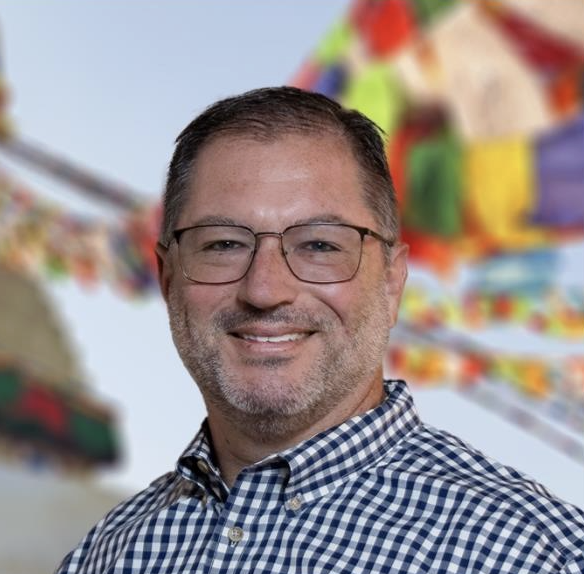
David Rettinger
Higher education stands at a crossroads. Economic, cultural, and technological forces are encouraging and permitting students to cheat in new and more pervasive ways. Generative AI has rendered current assessment regimes obsolete and called traditional pedagogical strategies into question across disciplines. How then, is an instructor to respond in the face of overwhelming change? In this session, David Rettinger will outline a positive approach to academic integrity, one that focuses on student learning and relies on evidence-based principles for guiding our policies, practices, and pedagogy. He will discuss the reasons why students cheat and suggest practical strategies that allow instructors to craft nuanced responses to artificial intelligence products, to reflect on what really matters and to foreground human interactions that foster student growth.
David Rettinger, Ph.D., teaches Psychology at the University of Tulsa. He holds a Ph.D. and MA in Psychology from the University of Colorado, Boulder, and an AB from the University of Michigan, Ann Arbor.
David has authored two books with Tricia Bertram Gallant: “The Opposite of Cheating: Teaching for Integrity in the Age of AI” (2025) and “Cheating Academic Integrity: Lessons from 30 Years of Research” (2022). His research has been published in psychology and education journals, and he has presented at international conferences. His work has been featured in media outlets like the CBS Morning Show, The New York Times, and The Washington Post.
David has delivered keynote addresses and workshops in countries like Nepal, Montenegro, and Mexico. He served as President of the International Center for Academic Integrity. David lives in Tulsa, Oklahoma, with his wife and daughter, enjoying the outdoors, travel, and watching Michigan football.